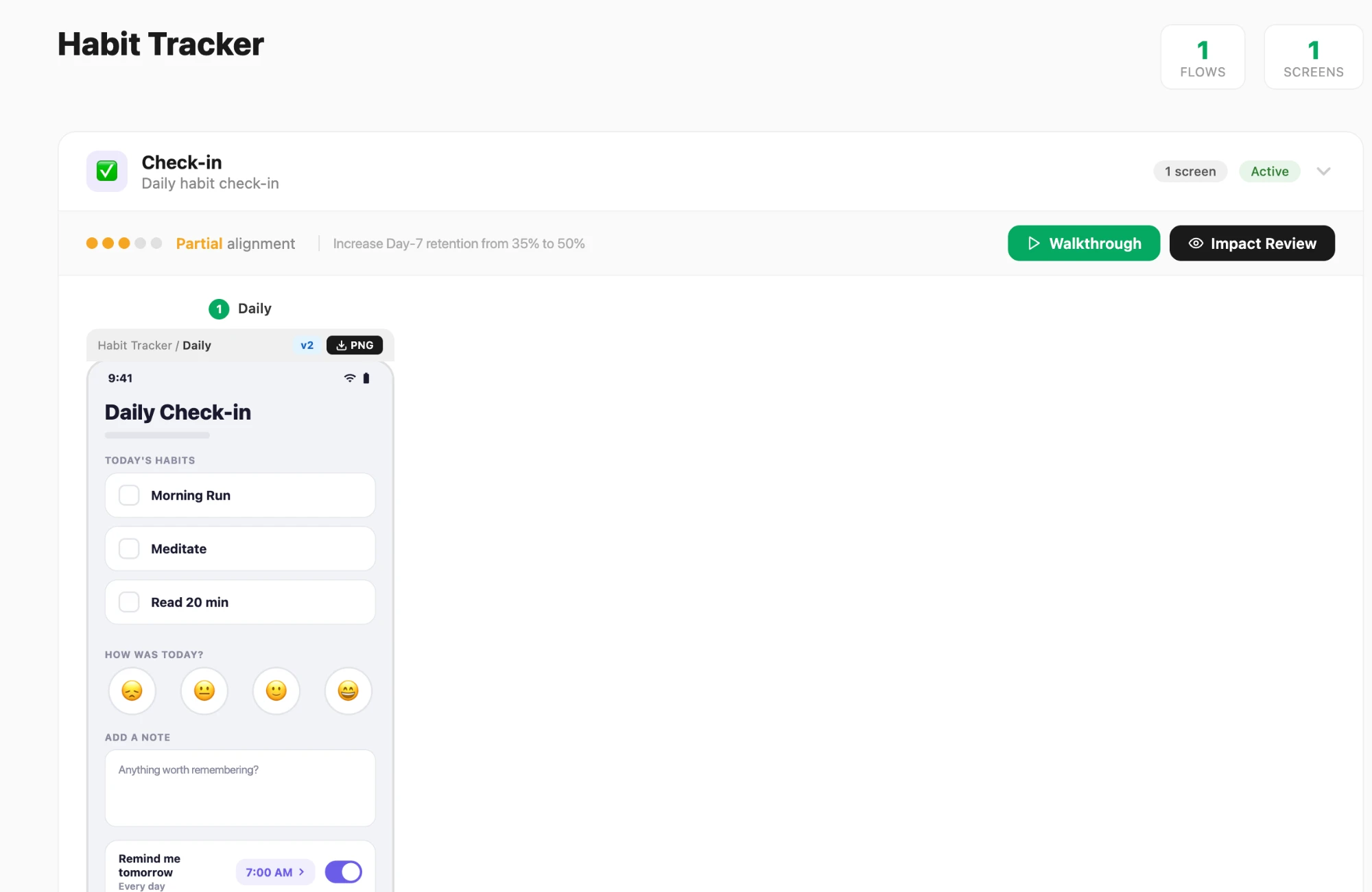
Design tools stop at “does it look good.” Fustat puts a screen on trial against the goal it’s meant to move. It stamps a verdict, and shows its evidence.
Pick a charge, and the court re-decides. That’s the plugin.
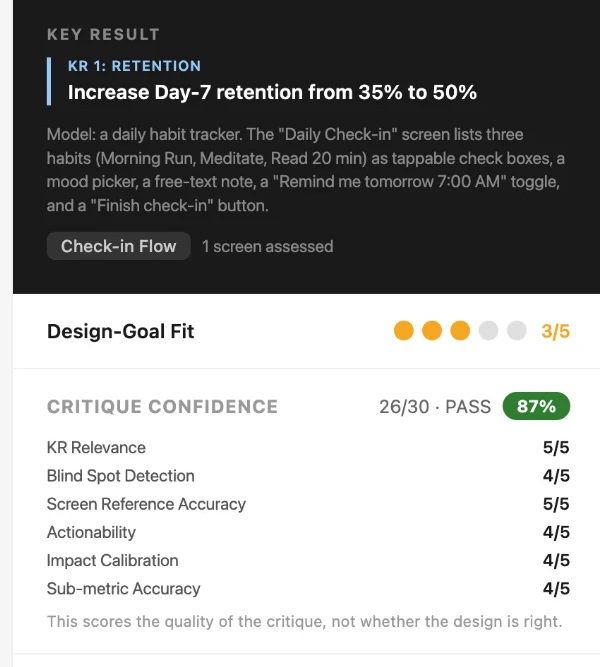
Point Fustat at your screens and a farm of reviewers goes to work. Every screen gets a verdict, every verdict gets evidence, and the critique never sleeps.


A napkin, a screenshot, a Figma frame. Fustat learns your design system and renders it in your look.
Name the KR. Every choice is weighed against it, with “how did I get this?” one click down.
A read-only judge certifies the critique’s quality. A confidence seal you can take to leadership.
Plaintiff
DefendantThey can argue all day. Fustat ends it. Every screen judged against the goal, not the loudest opinion in the room.
Give Fustat a persona and a cohort size. It deputizes a thousand agents for one, four hundred for another, and walks every one through the screen. A sequestered holdout never sees the change, so your lift has a clean control, not a hunch.
Run the cohorts to see each one walk the screen, at scale.
The holdout stayed on v1 and converted at the old rate. So the gap is the change, not the season. Directional rehearsal, not a guaranteed lift; Fustat tells you which calls are big enough to confirm with real users.
A senior designer disagrees? They file a note on the verdict: [accepted] or [needs work]. Fustat reads it on the next hearing and amends its finding. The expert leads; the agent learns.
THE HUMAN STEERS. FUSTAT ADAPTS.

Would you take AI feedback to your VP? Only if something vouched for it. One agent writes the critique; a second, read-only agent evals it, opening the real screen to verify every claim, then stamps a confidence score you can defend.


The bar is yours. The rubric is a file you own. Edit any dimension, set its weight, add your own. Try it →
THE EVAL ISN’T A BLACK BOX. IT’S YOURS TO SET.


Start with the open-source plugin. Get first access to Fustat Cloud: Figma in, agents that test your design, zero setup.